
National Popcorn Day
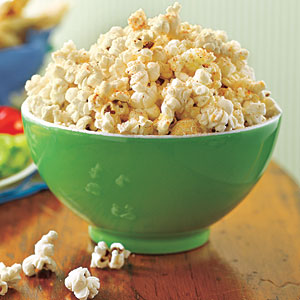
Many years before movies were around, there was popcorn! Archeologist have made us believe that popcorn is actually a “stone age snack”.
Researchers found 80,000-year-old corn pollen below Mexico City. These corn pollens are exactly the same as modern corn pollen, meaning cave people most likely had popcorn.
The oldest corn pollen ever found was discovered in the “Bat Cave” of central New Mexico. This pollen is believed to be 5,600 years old. Archaeologists have found prehistoric kernels of popcorn that are so well preserved that they can still pop!
In fact, popcorn only became popular to Americans in the 19th century. It became a well-known snack food which is why you can now find it in parks, movie theaters, at sporting events, and even street vendors.
During World War II, when sugar was rationed, Americans were forced to change their snacking habits. Americans were now eating three times as much popcorn as they had before compared to other sugary treats.
Today, the perfect place to eat popcorn is at the movies. Back in the 1930’s and 1940’s, it was the exact same scenario. However, when television took off in the 1950s, popcorn sales dropped for a while.
Americans now consume more popcorn than could fill the Empire State Building. That is more than fifty popped quarts per person, per year. That’s a lot of popcorn!
Celebrate National Popcorn Day, today, and get popping.
Written By: Amanda Haase

National Walk Your Pet Month
January is National Walk Your Pet Month. During these cold winter months, it is important to keep your four legged friend warm when taking them for walks.
Many people are under the impression that dogs have a better capability of surviving cold temperatures than humans. However, this is not entirely true. Dogs may have the advantage of a fur coat but it does not mean they can stay warm in bitter cold temperatures.
Here are some helpful tips to follow, when keeping your dog warm during outdoor winter activities:
1. Dress your dog in a warm sweater when going on walks and playing outside. This extra layer of warmth will allow your dog to have more time outside without getting cold too quickly.
2. Slip on some dog booties. Dog booties are a great way to keep your dog’s paws warm when walking them in cold weather conditions such as snow.
3. If your dog spends a lot of time outdoors, make sure they have the proper housing to shelter them. Their doghouse should have a sloped roof, insulation and even a heater if they will be in there for an extended amount of time.
4. Provide more food during winter months. Dogs use up more calories in the winter trying to stay warm. Providing a little extra food will allow your dog to have more energy.
Don’t forget the occasional treat and the belly rub. Nothing warms your dog’s heart and soul more than special food, and attention from their very best friend.
Written by: Amanda Haase

January is Eye Care Awareness Month
January is Eye Care Awareness month. Many think that eye exams and checkups are not as important as annual physicals from your primary doctor. That is not always the case.
It’s generally not necessary to see an eye doctor every 6 months for an eye exam, however, it is important to know when you should get your eyes checked. Age and medical conditions are two things to consider when making this choice.
Here are some other signs and symptoms that will let you know when it is time for an eye exam:
Sudden blurry vision or focus problems can be a sign of a larger health issue and should always be taken seriously. Even if it is happening in just one eye, play it safe and get it checked out.
Sudden appearances of visual disturbances such as floaters can be a sign of a retinal detachment, a retinal tear, or a retinal hole. If you experience this symptom, be sure to seek medical attention to avoid future vision loss or damage.
Gradual Blurring of Vision usually occurs over time or as we get older. If you have to move closer or further away from objects to have a better focus, it’s time to get a checkup.
Frequent or recurring headaches can be a closely related sign of a vision problem as well.
Having some infrequent eye pain or eye strain isn’t usually a big problem. However, if you are experiencing frequent eye pains or need to strain your eyes to focus, this could very well be a sign of a vision problem.
It is important that you and your family to get eyes checked today. Schedule an appointment with your eye care specialist for the New Year to avoid any future problems.
If you don’t have an eye doctor, find one at www.allaboutvision.com. This sight will help you locate an eye doctor in your area.
For more informational blogs like this one, visit our website at www.chedwards.net
Written by: Amanda Haase

The Tradition behind Milk and Cookies for Santa
Leaving milk and cookies for Santa Claus is a Christmas Eve tradition that goes as far back as any of us can remember. For generations, children regularly left a glass of milk and a plate of cookies for Santa so that he would have enough energy to complete his journey of gift giving before kids wake up on Christmas morning. Do you know the story behind this tradition?
The tradition of leaving cookies out on Christmas Eve may trace its origins to Saint Nicholas. On the feast of St. Nicholas (the patron saint of children) on December 6th, children would leave food and drink for the saint and any attendants. The treats would be exchanged for gifts.
That’s one theory behind the tradition. Others think the tradition is linked to the history of the Christmas tree and the edible decorations on it. Santa would snack on the ornaments. Even after edible decorations disappeared and inedible ornaments became popular, the tradition of leaving a snack for Santa remained.
Whatever the origins behind the tradition, millions of children leave milk and cookies For Santa on Christmas Eve like it’s a responsibility or simply the insurance that Santa will leave the gifts they asked for.
Just in case, don’t forget to leave milk and cookies for Santa this year. For all of your other Insurance needs, give C.H. Edwards, Inc. a call at 516-249-5200 and let one of Santa’s helpers assist you. If you happen to be up late waiting for Santa, our website is available to you at www.chedwards.net. On social media you can find us at www.facebook.com/chedwardsinsurance. Happy Holidays to all and to all a goodnight!
Written by: Denise Visco

What To Say / What Not To Say At The Dinner Table
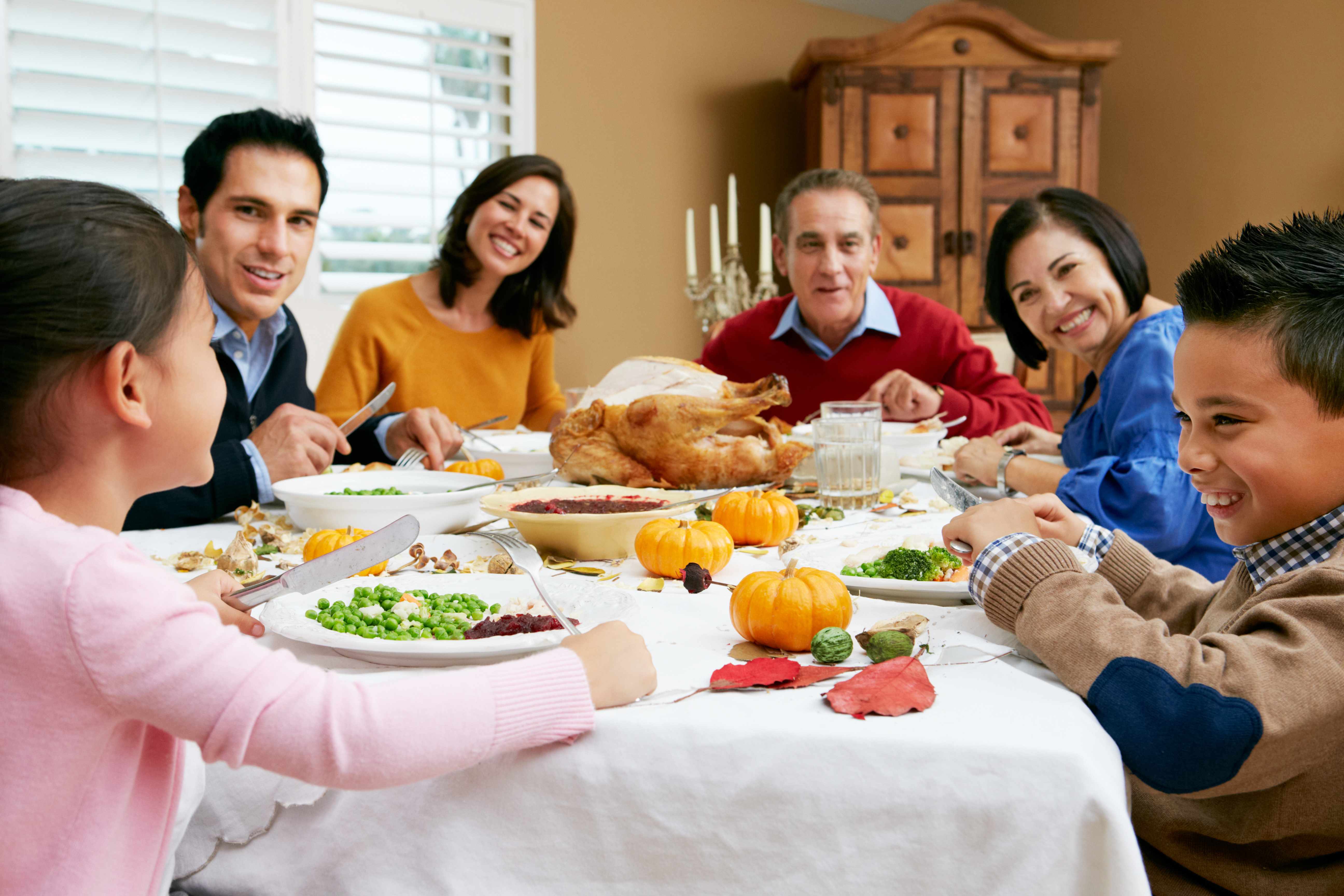
Thanksgiving dinner is a time for families to share thanks and reconnect. This is especially true when it comes to busy families. Life can be stressful, which can make it hard to keep up on all the things going on within your family, good or bad.
Keeping dinner discussions positive and saving the tough stuff for later is important, particularly with your children. Children who are faced with more positive interactions are happier, healthier and better learners in school.
Try a few of these positive swaps at your dinner table:
Instead of… “What homework do you have due on Monday?” Say… “What was the best part of your day today?”
Instead of…” Finish your carrots. There are starving children in the world” Say…” Did you know that carrots help keep your eyes healthy?”
Instead of…”Eat one more bite of your food” Say…”This is the last meal until dessert, ask your belly if it is really full!”
A positive life style is not only good for little ones but is good for everyone! Looking on the brighter side can help you become a better person, employee and friend.
Encourage positivity in your home today.
Have a Happy Thanksgiving from your friends at C.H. Edwards, Inc.
Written by: Amanda Haase

Life Insurance – Are You Ready To Have The Conversation?
Life Insurance is often a difficult topic for many to discuss. It is not a conversation that anyone wants to start and is often put off until a life event forces you too. Maybe the conversation would be easier if you had someone outside of the family that you could discuss this with? Having the answers to the questions your family may have before they ask can put you at ease. Looking at Life Insurance as a life plan, a plan for your future and retirement is another way to present the conversation.
Making this topic easier is as simple as giving C.H. Edwards, Inc. a call. We will start by answering your questions, help you decide which policy is right for you and your family within your budget and offer a no obligation quote.
C. H. Edwards, Inc. has everything to assist you in making this uneasy topic easier. Still not sure, visit our website at www.chedwards.net and find out who we are. We have been working with clients since 1925, with their home, auto and life insurance as well as assisting commercial clients with their particular needs.
At C.H. Edwards, Inc., our clients are part of our extended family and who else would you trust with such a major life decision?
Written by: Denise Visco
Common Teen Driving Mistakes
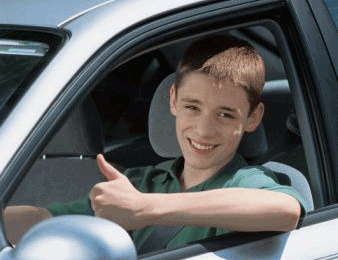
Fact: Teen drivers are nearly four times as likely to crash when on the road. Below are some of the most common mistakes made by teen drivers:
Peer Pressure – friends encouraging the driver to turn up the music, or violate other family rules, to distract the driver.
Drinking and Driving – In 2013, 17 percent of drivers ages 16-20 were involved in fatal car crashes, due to intoxication. Do not drink and drive!
Distractions – Distractions while driving are more than just cell phones. Talking to passengers, using navigation systems, and applying makeup while driving all count as distractions.
Failure to wear a seatbelt – Seatbelts save an estimated 12,174 lives each year. 55 percent of teens killed in car crashes were not wearing seat belts. Buckle up! It is the law!
Underestimating the risks that come with driving – Teens often underestimate the risks and responsibilities that come with getting behind the wheel, making them feel invincible. This can lead to careless, dangerous mistakes.
Driving at night – A teen driver’s chance of being involved in a deadly car crash doubles, when they travel at night. This can be due to limited visibility and other dangers on the road.
Having multiple passengers – When your teen drives with multiple passengers in their car, their risk of being involved in a car crash increases 44% due to possible increased distractions, caused by the passengers.
Loud Music – “Cranking up the tunes” and adjusting the radio can cause major distractions while driving.
Overestimating their driving abilities – Overestimating their driving abilities, such as what speed they are comfortable at, as well as maneuvering on the road, can be dangerous to them and other drivers.
Fast or reckless driving – Going too fast, tailgating, and road rage are often primary factor in teen crashes.
Although these facts may seem unfortunate, talk to your son or daughter about these dangers before this upcoming winter driving season. It is Important to protect them and others when they are behind the wheel.
If you have any further questions regarding the information provided or you have a new teen driver that you are looking to insure, give C.H. Edwards a call today at 516-249-5200 for a free no obligation quote for the whole family! Please visit our website at www.chedwards.net.
Let us help you get covered! Please drive safely.
Written by: Amanda Haase